
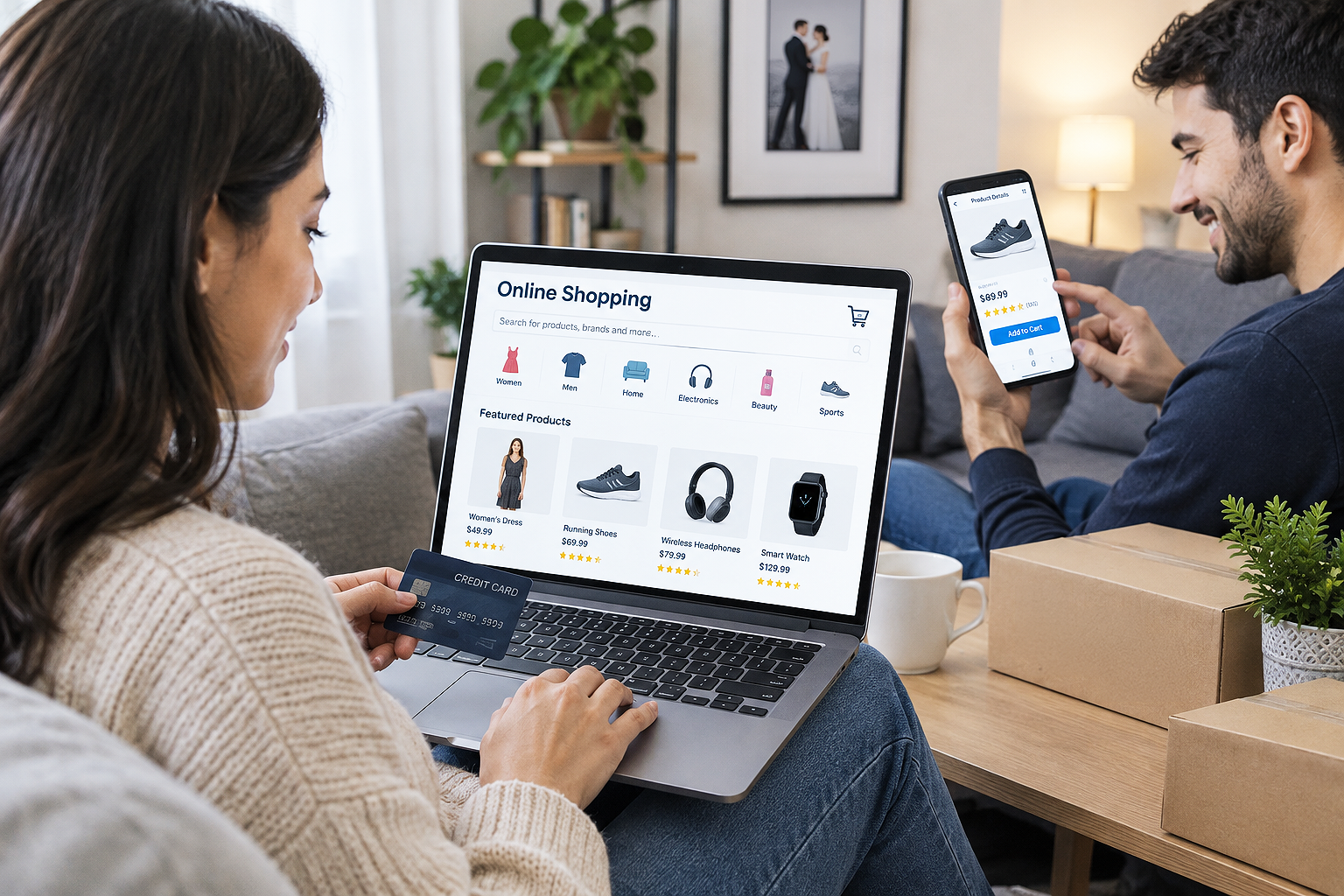
What is an E-Commerce Website?
An e-commerce website is a digital platform that enables the buying and selling of products or services over the internet. It acts as a virtual store where businesses (or individuals) display their offerings, and customers can browse, select, and purchase items without visiting a physical location.
E-commerce websites are the backbone of online shopping, facilitating transactions, payments, communication, and logistics between sellers and buyers.

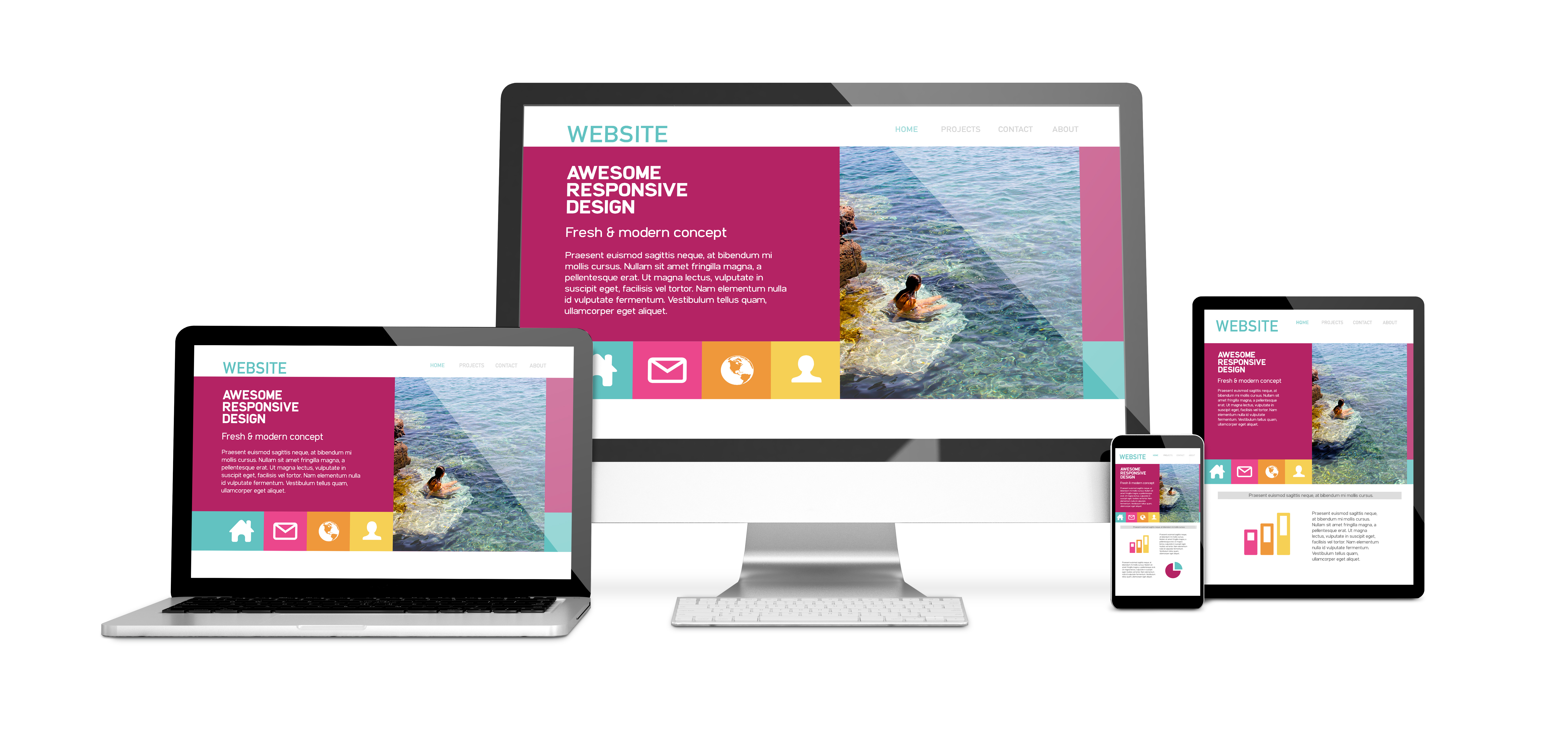
 Key Components of an E-Commerce Website Product Catalogue, User Accounts, Shopping Cart, Checkout System, Payment Gateway Integration, Order Management System, Security Features, Responsive Design, Search and Filtering, Customer Support
Types of E-Commerce Websites
- B2C (Business to Consumer): Businesses sell directly to consumers (e.g., Amazon)
- B2B (Business to Business): Businesses sell to other businesses (e.g., Alibaba)
- C2C (Consumer to Consumer): Individuals sell to each other (e.g., eBay)
- C2B (Consumer to Business): Individuals sell products/services to businesses (e.g., stock photo sites)
Advantages of E-Commerce Websites
1. Global Reach
E-commerce websites break down geographical barriers, allowing businesses to reach customers anywhere in the world. Unlike physical stores limited to a local market, an online store can attract and serve international customers 24/7. This global exposure increases the potential customer base exponentially, opening up new markets and opportunities for growth.
2. Lower Operational Costs
Running an e-commerce store is generally more cost-effective than maintaining a brick-and-mortar shop. There’s no need to pay for expensive retail space, utilities, or as much on-site staff. Costs such as digital marketing, web hosting, and inventory management are often lower than those associated with traditional retail. This makes it easier for small businesses and startups to enter the market and compete.
3. Convenience and Accessibility
E-commerce websites provide unparalleled convenience for both businesses and customers. Shoppers can browse, compare, and purchase products from the comfort of their homes or on the go, at any time of day—even on holidays. There are no restrictions due to store hours, and purchases can be completed quickly and easily. This level of accessibility caters to busy lifestyles and different time zones.
4. Wider Product Selection
Online stores are not limited by physical shelf space, so they can offer a much greater variety of products than traditional shops. Customers can find multiple brands, models, styles, and sizes all in one place. E-commerce sites can also offer products that are not available locally, including international goods and speciality items, giving customers more choice.
5. Personalised Shopping Experience
E-commerce platforms can collect and analyse data on customer browsing and purchasing behaviour. This information can be used to tailor product recommendations, send personalised offers, and create marketing campaigns that resonate with individual shoppers. Personalisation enhances the shopping experience, increases engagement, and boosts sales conversion rates.
6. Easy Price and Product Comparison
With e-commerce, customers can easily compare prices, features, and reviews across multiple sites in minutes. This transparency helps shoppers make informed decisions and find the best deals, while also encouraging competitive pricing among sellers. Price-comparison tools and apps make this process even simpler.
7. Efficient Inventory and Order Management
E-commerce websites often come equipped with sophisticated inventory management systems. Businesses can track stock levels in real time, forecast demand, and automate reordering processes. Order fulfilment, shipping, and returns can also be managed digitally, reducing errors and improving efficiency.
8. Scalability
E-commerce businesses can scale much more easily than physical stores. Adding new products, expanding to new markets, or handling increased traffic during sales events can usually be managed with software upgrades and additional digital marketing, rather than major investments in physical infrastructure.
9. Data Collection and Analytics
Every interaction on an e-commerce site can be tracked, analysed, and used to improve business decisions. Analytics tools provide insights into customer preferences, purchasing patterns, website performance, and marketing effectiveness. This valuable data helps businesses refine their strategies, optimise their offerings, and increase profitability.
10. Marketing Opportunities
E-commerce websites can integrate with a wide range of digital marketing tools, such as email newsletters, social media platforms, pay-per-click ads, and search engine optimisation (SEO). Automated marketing campaigns, retargeting, and affiliate marketing can help attract new customers and encourage repeat business, often at a lower cost than traditional advertising.
11. Contactless and Safe Shopping
Especially relevant in situations like the COVID-19 pandemic, e-commerce provides a safe, contactless shopping experience. Customers can order what they need and have it delivered to their doorstep, reducing the need for in-person interactions and helping to prevent the spread of illness.
12. Customer Reviews and Social Proof
E-commerce platforms usually allow customers to leave reviews and ratings on products. These reviews help other shoppers make confident buying decisions and provide valuable feedback to businesses. Positive reviews and high ratings can increase trust and credibility, while negative feedback offers opportunities for improvement.
13. Automation and Integration
Many routine business processes—such as order processing, payment verification, and inventory updates—can be automated through e-commerce software. Integration with accounting, CRM, and shipping solutions further streamlines operations, allowing businesses to focus on growth and customer service.
14. Lower Barrier to Entry
Starting an e-commerce business requires less upfront investment than opening a physical store. Entrepreneurs can launch online shops with minimal capital by using hosted platforms or marketplaces, making entrepreneurship more accessible to a wider range of people.
15. Home Delivery
After making a purchase online, customers benefit from having products delivered directly to their doorstep. This saves time, eliminates the need to carry heavy or bulky items, and is especially valuable for people with busy schedules or limited mobility. Many sites also offer order tracking, so customers can monitor their delivery’s progress

Shopping online home delivery.
Benefits customers in several ways:
- Effortless Shopping: Once an order is placed, the entire fulfilment process is managed by the seller or logistics partner. Customers simply wait for their package to arrive, saving time and physical effort, especially when buying large, heavy, or multiple items.
- Accessibility: Home delivery is invaluable for people with limited mobility, those living in remote or rural areas where stores may be far away, or anyone with a busy schedule who can’t easily visit physical locations.
- Flexible Delivery Options: Many e-commerce platforms let customers choose their preferred delivery dates and times, opt for express or same-day shipping, or request special handling instructions. Some sites offer contactless delivery for added safety and convenience.
- Order Tracking: Modern e-commerce websites provide real-time tracking, allowing customers to monitor the status of their order from dispatch to delivery. Notifications via email or text keep shoppers informed every step of the way, reducing uncertainty and providing peace of mind.
- Secure Packaging: Items are typically packed securely to prevent damage during transit. For sensitive or valuable purchases, additional safety measures—like insurance or signature-required delivery—may be available.
For recurring needs, such as groceries, household essentials, or pet supplies, many sites offer subscription or auto-replenishment services, ensuring customers never run out of their most-used items.
Ultimately, home delivery saves time, reduces physical strain, and brings a level of convenience that has fundamentally changed the way people shop, making the entire process smoother, safer, and tailored to each individual’s lifestyle.
E-Commerce Benefits for Shopkeepers
Handling Multiple Customers at Once
A major benefit of e-commerce for shopkeepers is the ability to serve many customers simultaneously. Unlike a physical store where a shopkeeper can help only a few people at a time, an online store allows countless customers to browse, order, and pay at once. Automated systems manage these transactions efficiently, leading to higher sales and better customer satisfaction without the need for extra staff.
Wider Customer Reach
E-commerce platforms allow shopkeepers to showcase their products to customers far beyond their local area. Instead of being limited to walk-in customers, they can attract buyers from different cities, states, or even countries, greatly expanding their market and sales potential.
Lower Operational Costs
Running a physical store involves expenses such as rent, utilities, and staffing. With e-commerce, many of these costs are reduced or eliminated. Shopkeepers can operate with a smaller physical footprint, automate processes, and even manage their business from home.
24/7 Sales Opportunity
An online store never closes. Shopkeepers can make sales at any time of day or night, including weekends and holidays. This continuous availability maximises sales opportunities and caters to customers with busy or unconventional schedules.
Easier Inventory Management
E-commerce platforms often provide built-in inventory management tools. Shopkeepers can track stock levels in real time, set reorder alerts, and avoid both overstocking and stockouts. This helps streamline operations and minimise losses.
Direct Customer Communication
Shopkeepers can interact directly with their customers through online chat, email, or social media. This direct line fosters better relationships, enables personalised service, and allows for quick resolution of issues or feedback collection.
Data and Analytics
Online selling provides valuable insights into customer behaviour, popular products, and sales trends. Shopkeepers can use analytics tools to understand what sells best, when customers are most active, and which marketing strategies work, allowing for smarter business decisions.
Reduced Marketing Costs
Digital marketing—such as social media promotion, email campaigns, and search engine optimisation—is often more affordable and effective than traditional advertising. Shopkeepers can target specific customer groups and measure the results of their campaigns in real time.
Flexibility and Scalability
E-commerce makes it easy for shopkeepers to add new products, change pricing, or launch promotions at any time. As the business grows, it’s also easier to scale up operations online compared to expanding a physical store.
Improved Cash Flow
Online payments are processed quickly, sometimes instantly. This helps shopkeepers maintain steady cash flow, pay suppliers on time, and reinvest in their business without long waits for payments.
Competitive Edge
By adopting e-commerce, shopkeepers can stay ahead of competitors who rely solely on traditional retail. They can offer conveniences like home delivery, online customer support, and digital payment options that appeal to modern shoppers.
In summary, e-commerce empowers shopkeepers with greater reach, lower costs, and powerful tools to grow and manage their business efficiently. It transforms traditional selling into a dynamic, data-driven, and customer-focused operation, opening new opportunities for success.
Examples of popular e-commerce websites:
Amazon
is the world’s largest and most influential e-commerce platform. Amazon rapidly expanded its offerings to become a global marketplace for virtually every category imaginable—electronics, clothing, home goods, groceries, digital content, and much more. Today, Amazon operates in numerous countries, serves hundreds of millions of customers, and sets the benchmark for online shopping experiences worldwide.

Myntra
is one of India’s leading e-commerce platforms, specialising in fashion, lifestyle, and accessories. Today, it stands as a household name in Indian online retail, offering an extensive range of clothing, footwear, accessories, beauty products, and more for men, women, and children.
Flipkart
is one of India’s largest and most successful e-commerce platforms. Product categories include electronics, fashion, home appliances, groceries, furniture, and more—ultimately becoming an all-encompassing online marketplace for millions of Indian consumers.
Challenges for E-Commerce Websites
1. Fierce Competition
The barrier to entry for online businesses is relatively low, resulting in thousands of e-commerce websites competing for the same audience. Standing out and attracting customers in a crowded market requires effective marketing, unique branding, and constant innovation. Larger players like Amazon set high standards for pricing, delivery speed, and customer service, making it even more challenging for smaller businesses.
2. Website Security
Handling sensitive customer data—such as payment information, personal details, and passwords—makes e-commerce sites prime targets for cybercriminals. Security breaches can lead to loss of customer trust, legal consequences, and financial damages. Keeping up with the latest security protocols, using SSL certificates, complying with data protection laws (like GDPR), and regular vulnerability assessments are all essential yet demanding tasks.
3. Building Trust and Credibility
Many customers are still wary of shopping online, especially from lesser-known websites. Establishing trust requires visible security badges, clear return policies, customer reviews, responsive customer service, and transparent business practices. Any negative news, poor reviews, or delayed deliveries can undermine credibility.
4. Logistics and Order Fulfilment
Efficiently managing inventory, shipping, returns, and deliveries is a major operational challenge. E-commerce businesses must coordinate with multiple suppliers and logistics partners to ensure timely and accurate deliveries. Delays, damaged products, or lost shipments can harm the brand’s reputation and lead to customer dissatisfaction.
5. Website Performance
A slow or poorly designed website can lead to high bounce rates and lost sales. E-commerce sites need to handle large volumes of traffic, especially during sales or festive seasons. Ensuring fast page loads, mobile optimisation, and minimal downtime is critical, and often requires technical expertise and investment in robust infrastructure.
6. Customer Service Expectations
Online shoppers expect prompt, helpful, and multi-channel support. Handling inquiries, complaints, returns, and refunds efficiently is crucial for building loyalty. Providing 24/7 customer service, whether through live chat, email, or phone, can be resource-intensive for smaller businesses.
7. Managing Returns and Refunds
Returns are a natural part of online shopping, but managing them smoothly is complex and costly. Businesses must balance customer-friendly policies with the risk of abuse, handle reverse logistics, inspect returns, and process refunds quickly to maintain customer satisfaction.
8. Digital Marketing and Customer Acquisition
Reaching and retaining customers online is expensive and competitive. Paid advertising, search engine optimisation (SEO), content marketing, and social media campaigns require constant investment and expertise. The cost of acquiring new customers is often high, and keeping them engaged and loyal presents an ongoing challenge.
9. Legal and Regulatory Compliance
E-commerce businesses must comply with a variety of laws and regulations, which may vary by country or state. These include consumer protection laws, tax collection, privacy regulations, and online sales restrictions for certain products. Failing to comply can result in fines or legal action.
10. Adapting to Changing Technology and Trends
The digital landscape evolves rapidly, with new technologies, payment methods, and consumer behaviours continually emerging. E-commerce websites must adapt to trends like mobile commerce, voice search, social shopping, and alternative payment options to remain relevant and competitive.
These challenges require ongoing attention, strategic planning, and investment to ensure a successful and sustainable e-commerce business.



0 Comments